


Doti Kau
Fashion
Six months. I came in for strategy and structure, built the foundation, and left. It held.
Four a year · six weeks each · $600
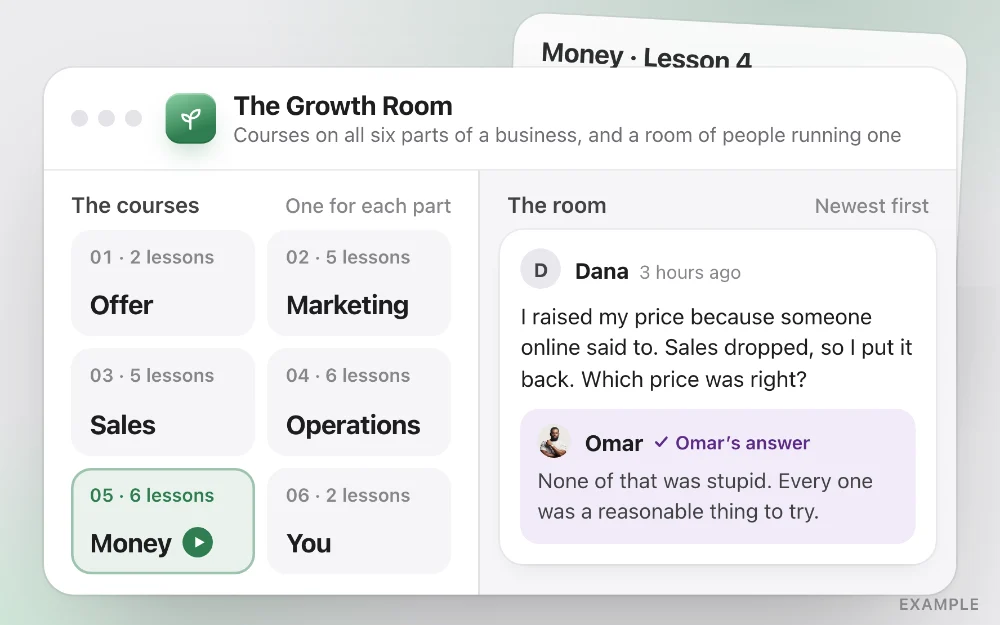
Tight ShipOperations · Nov 30 to Jan 21Open Done DealSales · Feb 15 to Mar 25Hold a seat Bottom LineMoney · May 17 to Jun 24Hold a seat Top of MindMarketing · Aug 23 to Sep 30Hold a seatOne on one
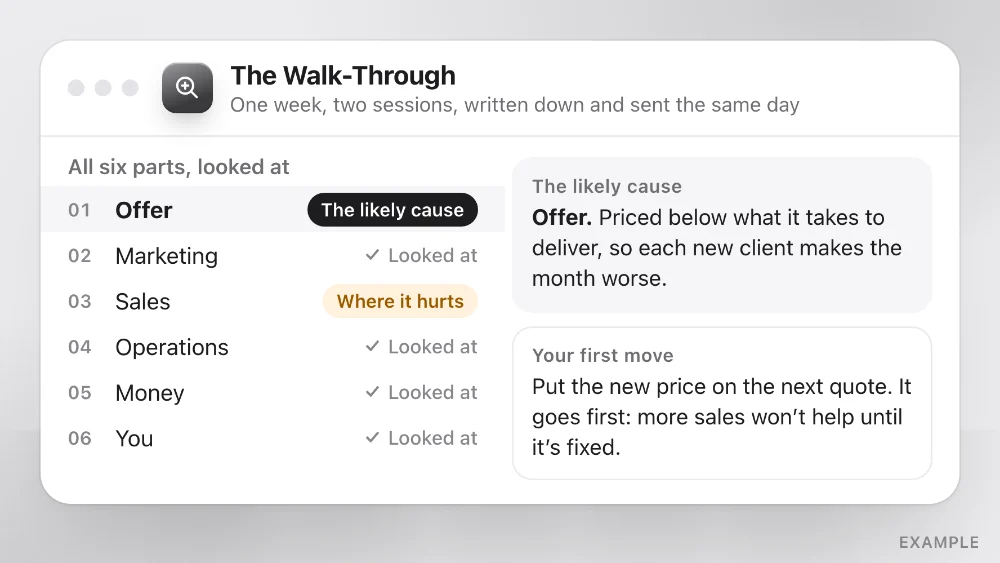
The Walk-ThroughOne week, two sessions. All six parts, and the likely cause written down.One week The Full PictureFive weeks, three sessions. What’s broken, why, and what to fix first.Five weeksThe free 15 minutes comes first. You get the price on the call.
 How one on one works
About · Business architect
The long version of how I got here, the failures included.
It’s free You hear back within two business days
Most people’s stories start the same way. Zero to hero. Impossible odds. Built it from nothing with twenty dollars and a dream.
If that’s what you’re expecting, I’m sorry to disappoint you. I wasn’t broke. I wasn’t struggling. I wasn’t fighting my way out of anything.
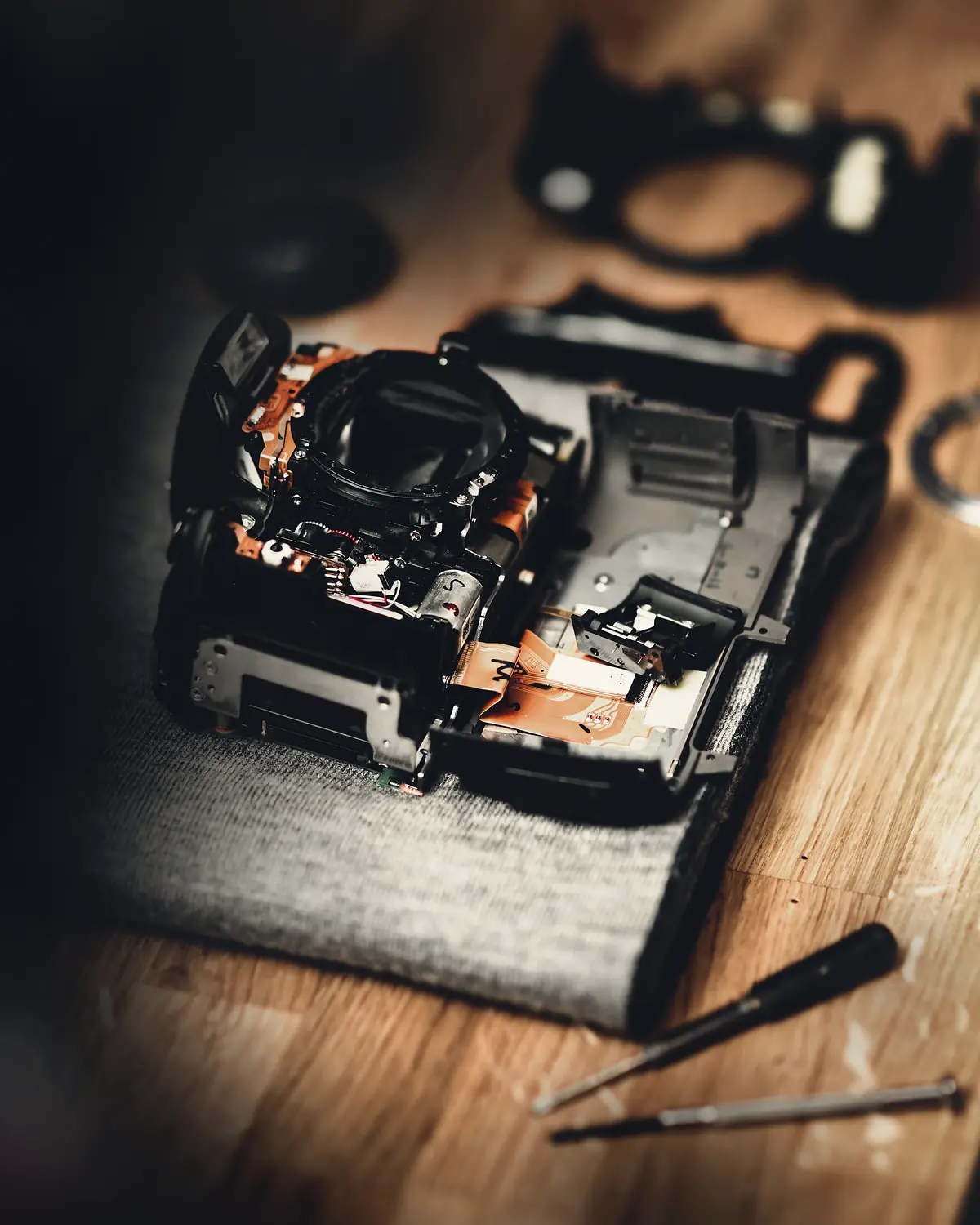
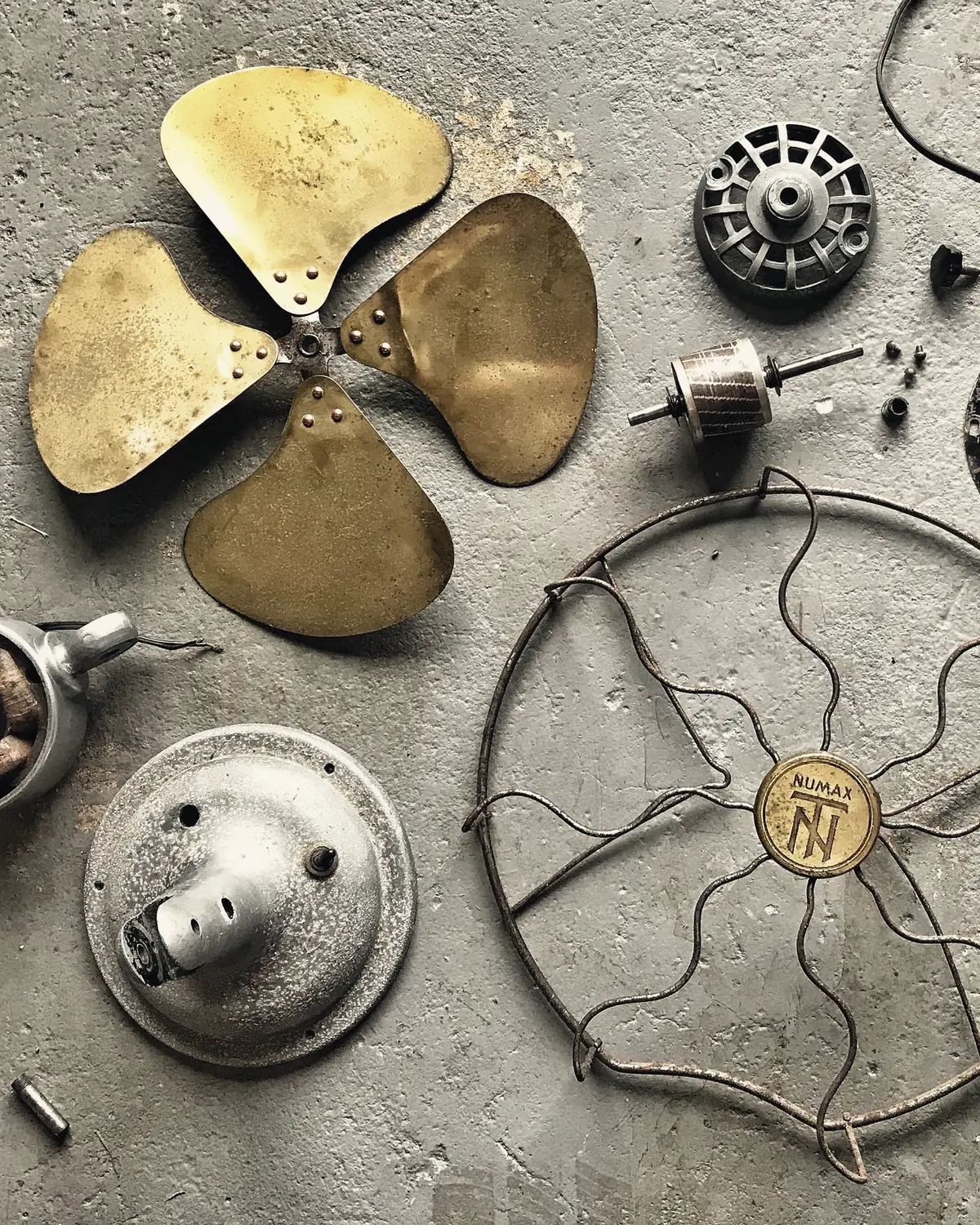
The obsession started before I even had words for it. As a kid, I was the one adults called troublesome. I broke everything. Toys, appliances, gadgets, electronics. If I could get my hands on it, I was taking it apart. Most people looked at that and saw a destructive child. I wasn’t being destructive. I was trying to understand how things worked.
My grandfather was the only person who understood that. He would travel abroad, bring things home, and within a few days I would have them in pieces on the floor. He never stopped me. He never even flinched. I think he saw something in that impulse that everyone else missed. That the kid who keeps taking things apart is the kid who eventually learns how to put things together properly.
To be honest, most of the stuff I took apart never got put back together. It usually ended up wasted. But the understanding stuck, even if the gadget didn’t survive.
My mom bought me my first laptop. A few weeks later I had a screwdriver kit out and the whole thing was open on the table. I wasn’t trying to fix anything. Nothing was broken. I just needed to see what was inside. That’s the kind of child I was.
School was more of the same. My science teachers said I asked too many questions, and they meant it as a compliment. That award tells you everything you need to know about where I was spending my time while everyone else was out on the football pitch or at home getting good at FIFA.
To this day, when I play my friends at FIFA, the score line usually looks something like 8 to 1. And not in my favor. I made my trade-offs early. I can’t beat anyone at FIFA, but I can tell you exactly why a business is bleeding money in under an hour. I’m at peace with that.
The curiosity never stopped. It just got bigger. Books. Documentaries. Space. Physics. Business. The stock market. Anything with a system underneath it that I could take apart and understand. Same impulse I had as a five-year-old with a screwdriver. The only thing that changed was the size of the things I was opening up.

Not theoretically. Not as a conversation topic. Specifically. What is structurally different about the ones who make it?
I didn’t just read about it. I tested everything.
Over the years I’ve owned and operated multiple businesses. I built a media company. I ran videography and photography businesses. I owned a textile and fashion accessories business. I went into cars and didn’t sell a single one. I spent two years trading forex, which is a very specific kind of education. Forex doesn’t teach you strategy. It teaches you what happens when you make decisions under real pressure with real money and real consequences. You learn fast or you lose fast. I did both.
I also spent six months as a brand strategist for Doti Kau. Came in, helped them build a real foundation. Strategy, positioning, structure. That foundation held. Today they’re one of the biggest fashion businesses in their market. That’s the engagement I’m most proud of, because the work outlasted me. That’s always the test.
Not everything survived. Some burned out. Others thrived. A few just quietly limped along doing nothing impressive. I paid attention to all of them.

And I mean a lot more. Not a little more. Not a close ratio. Most of what I tried didn’t work. Businesses burned out. Ideas collapsed. Some things just quietly stopped being viable and I had to walk away.
The difference is I never let a failure stay a failure. They say the only failure that remains a failure is the one you don’t learn from. I took that literally. Every single time something went wrong, I sat with it until I understood exactly why it went wrong. Not the excuse. Not the bad luck story. The structural reason. What was missing. What was misaligned. What I should have built before I started scaling.

“People who win never truly know why they win. But people who lose always learn why they lost.”
That quote rewired how I think. I took it literally. I chased failure on purpose. Most people avoid mistakes. I ran straight into them. Every loss showed me what not to do and compressed years of learning into weeks. A failed business that costs you six months teaches you more than an MBA that costs you two years. I’ve had enough of those failed businesses to have the equivalent of several MBAs. I just also have the scars to show for it.
That’s how I got good fast.
Different businesses. Same line, every time.
Mine or anyone else’s. The same six, failing in predictable ways. Marketing was invisible. Sales had no pipeline. The offer was underpriced or poorly packaged. Operations lived entirely in the owner’s head. Finance was a black box everyone was afraid to open. And the owner was the bottleneck. The one part nobody wanted to look at, because looking means the mirror.
And almost always, the owner themselves was the bottleneck. But nobody had told them, because nobody wanted to have that conversation.
Here’s something people around me have said for years. They say Omar always finds a way. Not because I’m the smartest person in the room. Because my approach to solving problems has always been unconventional. I don’t look at the obvious answer. I look underneath the obvious answer and ask whether the structure holding it up is actually sound. Most of the time, it isn’t. Most of the time, the thing people think is broken is a symptom of something deeper that nobody examined, because everyone was too busy reacting to the surface.
I’ve been doing that since I was five years old taking apart my grandfather’s stuff on the living room floor. The only thing that changed is what I’m taking apart now.
I read hundreds of business books along the way. Genuinely, hundreds. Most of them were useless. Not because the ideas were bad. Because the ideas were written by people who had never tested them inside a business that could actually fail. Theory is comfortable. But theory doesn’t survive contact with a real business with real employees, real bills, and a business owner who hasn’t slept properly in three months.
So I stopped reading and started building. Company after company. Failure after failure. Each one faster than the last, because the failures were compressing years of learning into weeks.

Friends at first. Then business owners I barely knew. Then, strangely, people who were further ahead than me. Not because I called myself an expert. I never did. But the advice worked. The things I told people to do actually produced results, and that was different from most of the advice they were getting. They noticed.
I tested that too, because I test everything. I worked with a few people for free, just to see if I could take what I’d learned from my own failures and apply it to someone else’s business and get consistent results. I could. One of those clients brought in two more without me asking. And those two brought in more.
That’s when it clicked. This wasn’t just obsession anymore. It was a skill. A real, transferable, repeatable skill. I could look at any business, see where the structure was broken, and tell the owner exactly what to fix and in what order. And it worked. Not once. Over and over.

I work with business owners who are running businesses that feel harder than they should. Businesses where the effort is high, the clarity is low, and growth feels stressful instead of controlled. Where the owner is working twelve-hour days and the business still isn’t moving. Where the team is growing but the chaos is growing faster. Where revenue is coming in but the money is leaking out just as fast.
It isn’t the only thing I run. There’s a media business, a fashion business I co-own, and a consulting firm I co-own that’s handled projects worth millions of dollars. Sargasso is just the one where I do the thing I’ve been doing since I was five.
I’m not writing this from the outside. I’m running businesses while I take other people’s apart.
Fashion
Six months. I came in for strategy and structure, built the foundation, and left. It held.

Food business
“He helped me make more money than I thought was possible.”
A food business making money and watching it disappear.

Services
She felt like she was everywhere at once. Now she travels without wondering what’s falling apart while she’s gone.

Technology
Their operations had no structure. We built one. They run tighter, take on more clients, and their people are finally in the right places.

Creator, 400,000 followers
Content creator, 400,000 followers. He makes three times what he used to on the system we built, and he’s working less to do it.

Media company
“Operations run smoothly and I have my time back.”Mukaram · DiveIN Media
Owner buried in daily fires. Operations run without him now, and the clients pay properly.
Wins are easy to talk about. Everyone talks about their wins. I’m asking you to work with me because I’ve failed more times than most people are willing to admit publicly. I’ve watched businesses collapse, stall, leak money, and burn out. Not other people’s businesses. My businesses. I’ve made the wrong moves, in the wrong order, for the wrong reasons. And I’ve paid for every single one of them.
That gave me something more valuable than confidence. It gave me judgment. The kind you can only get from being wrong enough times that the right answer becomes obvious. A deep understanding of what not to do, what actually matters, and which mistakes cost the most.

Keep taking your business apart on your own and hoping it goes back together. Or hand it to someone who’s done it enough times to see the shape fast.
Tight Ship: six weeks on Operations, Nov 30 to Jan 21. Seats close November 29. Full refund up to the second Monday.