
Omar didn’t study consulting. He studied problems.
The long version of how he got here, the failures included.
50+ businesses taken apart, end to end

Most people’s stories start the same way. Zero to hero. Impossible odds. Built it from nothing with twenty dollars and a dream.
If that’s what you’re expecting, Omar is sorry to disappoint you. He wasn’t broke. He wasn’t struggling. He wasn’t fighting his way out of anything.

He didn’t want to play with the thing. He wanted to see what was inside it.
The obsession started before he even had words for it. As a kid, he was the one adults called troublesome. He broke everything. Toys, appliances, gadgets, electronics. If he could get his hands on it, he was taking it apart.
Most people looked at that and saw a destructive child. He wasn’t being destructive. He was trying to understand how things worked.

His grandfather was the only person who understood that. He would travel abroad, bring things home, and within a few days Omar would have them in pieces on the floor. He never stopped Omar. He never even flinched.
Omar thinks his grandfather saw something in that impulse that everyone else missed. That the kid who keeps taking things apart is the kid who eventually learns how to put things together properly.
To be honest, most of the stuff he took apart never got put back together. It usually ended up wasted. But the understanding stuck, even if the gadget didn’t survive.

His mom bought him his first laptop. A few weeks later he had a screwdriver kit out and the whole thing was open on the table. He wasn’t trying to fix anything. Nothing was broken. He just needed to see what was inside. That’s the kind of child he was.

He was named best library user in his school, which is a very specific award to win.
School was more of the same. His science teachers said he asked too many questions, and they meant it as a compliment.
That award tells you everything you need to know about where he was spending his time while everyone else was out on the football pitch or at home getting good at FIFA.

To this day, when he plays his friends at FIFA, the score line usually looks something like 8 to 1. And not in his favor. He made his trade-offs early. He can’t beat anyone at FIFA, but he can tell you exactly why a business is bleeding money in under an hour. He’s at peace with that.

The curiosity never stopped. It just got bigger. Books. Documentaries. Space. Physics. Business. The stock market. Anything with a system underneath it that he could take apart and understand. Same impulse he had as a five-year-old with a screwdriver. The only thing that changed was the size of the things he was opening up.
Why do some people win while others, doing the exact same thing, stay stuck?
Not theoretically. Not as a conversation topic. Specifically. What is structurally different about the ones who make it?
He didn’t just read about it. He tested everything.
He tested everything.
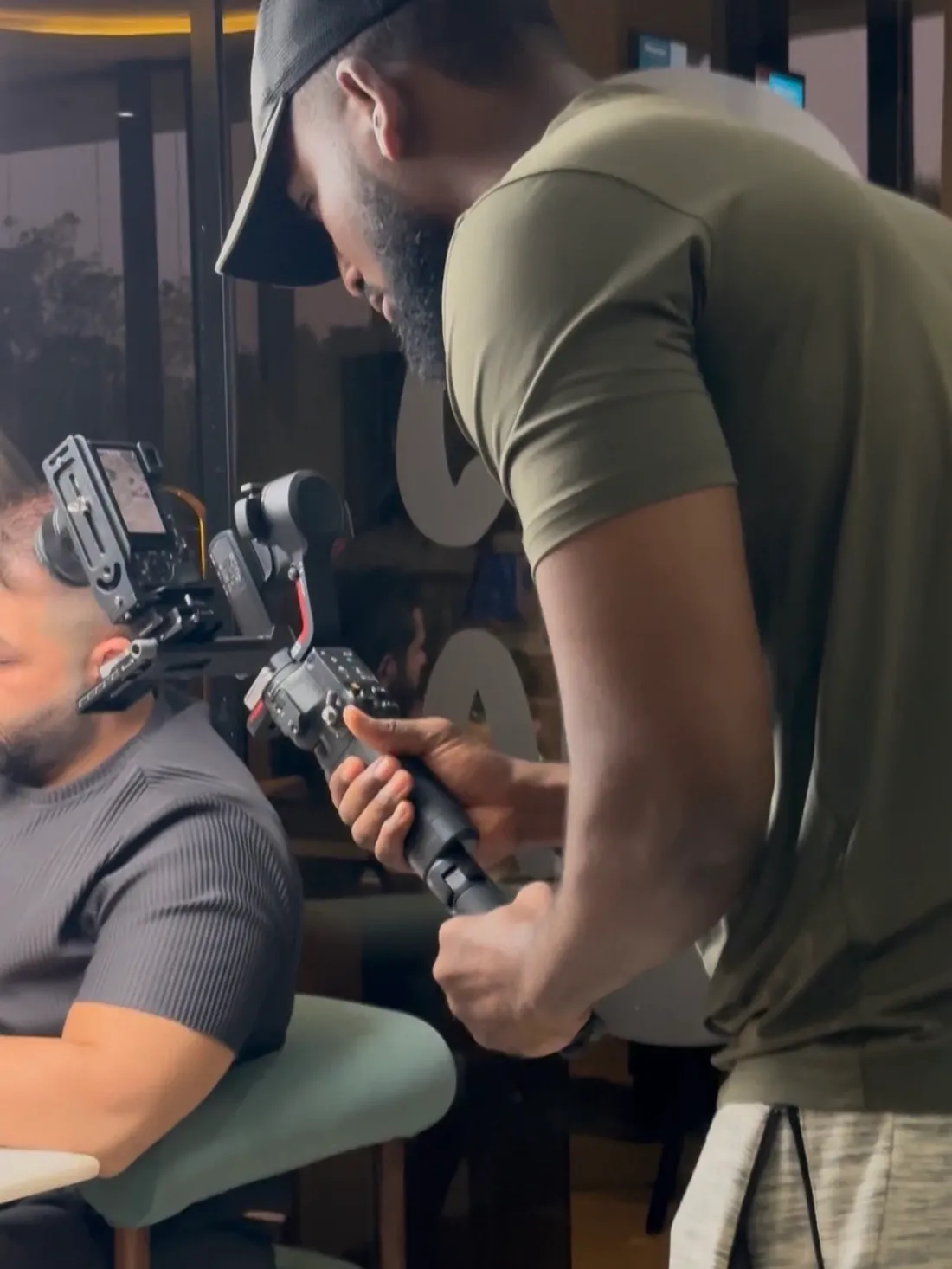
Over the years he’s owned and operated multiple businesses. He built a media company. He ran videography and photography businesses. He owned a textile and fashion accessories business. He went into cars and didn’t sell a single one.

He spent two years trading forex, which is a very specific kind of education. Forex doesn’t teach you strategy. It teaches you what happens when you make decisions under real pressure with real money and real consequences. You learn fast or you lose fast. He did both.

He also spent six months as a brand strategist for Doti Kau. Came in, helped them build a real foundation. Strategy, positioning, structure. That foundation held. Today they’re one of the biggest fashion businesses in their market.
That’s the engagement he’s most proud of, because the work outlasted him. That’s always the test.

Not everything survived. Some burned out. Others thrived. A few just quietly limped along doing nothing impressive. He paid attention to all of them.
He has failed a lot more than he has succeeded.
And he means a lot more. Not a little more. Not a close ratio. Most of what he tried didn’t work. Businesses burned out. Ideas collapsed. Some things just quietly stopped being viable and he had to walk away.
The difference is he never let a failure stay a failure. They say the only failure that remains a failure is the one you don’t learn from. He took that literally.
Every single time something went wrong, he sat with it until he understood exactly why it went wrong. Not the excuse. Not the bad luck story. The structural reason. What was missing. What was misaligned. What he should have built before he started scaling.

The quote that changed how he thinks
“People who win never truly know why they win. But people who lose always learn why they lost.”
That quote rewired how he thinks. He took it literally. He chased failure on purpose. Most people avoid mistakes. He ran straight into them. Every loss showed him what not to do and compressed years of learning into weeks.
A failed business that costs you six months teaches you more than an MBA that costs you two years. He’s had enough of those failed businesses to have the equivalent of several MBAs. He just also has the scars to show for it.
That’s how he got good fast.
Different businesses. Same line, every time.

Every business broke in the same six places. Not approximately. Exactly.
His or anyone else’s. The same six, failing in predictable ways. Marketing was invisible. Sales had no pipeline. The offer was underpriced or poorly packaged. Operations lived entirely in the owner’s head. Finance was a black box everyone was afraid to open.
And the owner was the bottleneck. The one part nobody wanted to look at, because looking means the mirror.
And almost always, the owner themselves was the bottleneck. But nobody had told them, because nobody wanted to have that conversation.

Here’s something people around him have said for years. They say Omar always finds a way. Not because he’s the smartest person in the room. Because his approach to solving problems has always been unconventional.
He doesn’t look at the obvious answer. He looks underneath the obvious answer and asks whether the structure holding it up is actually sound. Most of the time, it isn’t.
Most of the time, the thing people think is broken is a symptom of something deeper that nobody examined, because everyone was too busy reacting to the surface.
He’s been doing that since he was five years old, taking apart his grandfather’s stuff on the living room floor. The only thing that changed is what he’s taking apart now.

Theory lets you sound smart at dinner. It doesn’t survive contact with a real business.
He read hundreds of business books along the way. Genuinely, hundreds. Most of them were useless. Not because the ideas were bad. Because the ideas were written by people who had never tested them inside a business that could actually fail.
Theory is comfortable. But theory doesn’t survive contact with a real business with real employees, real bills, and a business owner who hasn’t slept properly in three months.
So he stopped reading and started building. Company after company. Failure after failure. Each one faster than the last, because the failures were compressing years of learning into weeks.

Then people started asking for help.
Friends at first. Then business owners he barely knew. Then, strangely, people who were further ahead than him. Not because he called himself an expert. He never did.
But the advice worked. The things he told people to do actually produced results, and that was different from most of the advice they were getting. They noticed.
He tested that too, because he tests everything. He worked with a few people for free, just to see if he could take what he’d learned from his own failures and apply it to someone else’s business and get consistent results. He could.

One of those clients brought in two more without him asking. And those two brought in more.
That’s when it clicked. This wasn’t just obsession anymore. It was a skill. A real, transferable, repeatable skill.
He could look at any business, see where the structure was broken, and tell the owner exactly what to fix and in what order. And it worked. Not once. Over and over.

That’s why he started Sargasso.
He works with business owners who are running businesses that feel harder than they should. Businesses where the effort is high, the clarity is low, and growth feels stressful instead of controlled.
Where the owner is working twelve-hour days and the business still isn’t moving. Where the team is growing but the chaos is growing faster. Where revenue is coming in but the money is leaking out just as fast.

It isn’t the only thing he runs. There’s a media business, a fashion business he co-owns, and a consulting firm he co-owns that’s handled projects worth millions of dollars. Sargasso is just the one where he does the thing he’s been doing since he was five.
See what he’s builtThis isn’t coming from the outside. He’s running businesses while he takes other people’s apart.

Omar isn’t asking you to work with him because he’s had wins.
Wins are easy to talk about. Everyone talks about their wins. He’s asking you to work with him because he’s failed more times than most people are willing to admit publicly.
He’s watched businesses collapse, stall, leak money, and burn out. Not other people’s businesses. His businesses. He’s made the wrong moves, in the wrong order, for the wrong reasons. And he’s paid for every single one of them.
That gave him something more valuable than confidence. It gave him judgment. The kind you can only get from being wrong enough times that the right answer becomes obvious. A deep understanding of what not to do, what actually matters, and which mistakes cost the most.

If you’re tired of learning everything the hard way.
Keep taking your business apart on your own and hoping it goes back together. Or hand it to someone who’s done it enough times to see the shape fast.
Book the free 15 minutes